Why a bunny & eggs at Easter?
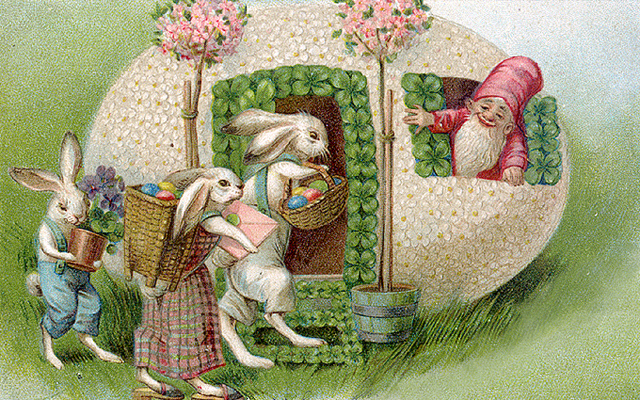
Did you ever wonder why it’s an Easter bunny with Easter eggs?
CLICK HERE for the full story, plus more Easter Fun Facts!

Store Hours: Mon-Sat 10-5/Sun 11-5

Did you ever wonder why it’s an Easter bunny with Easter eggs?
CLICK HERE for the full story, plus more Easter Fun Facts!
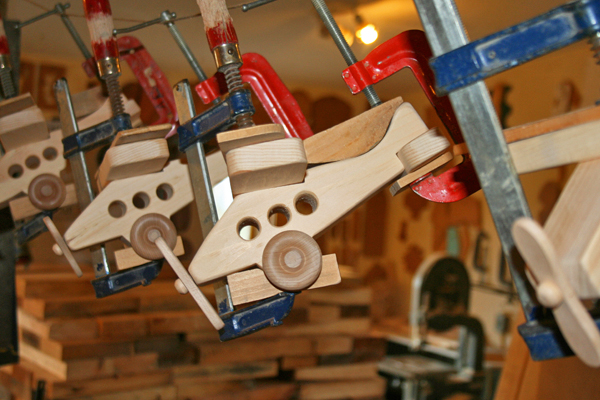
Hands On @ The Toy Factory Workshop: The Airplane.
Turning a block of white pine into an old-fashioned wooden toy airplane is a multi-step process in our workshop.
It starts, like all our wooden toys, with simple templates we’ve designed – in this case for the airplane body, wing, tail & propellor.
Step 1:
We trace the airplane body templates on blocks of 2″ pine. Then we cut them out with our bandsaw, and drill holes for windows and wheels. We cut the other parts – wings, tails and propellors – from pine and maple using our table saw and bandsaw.
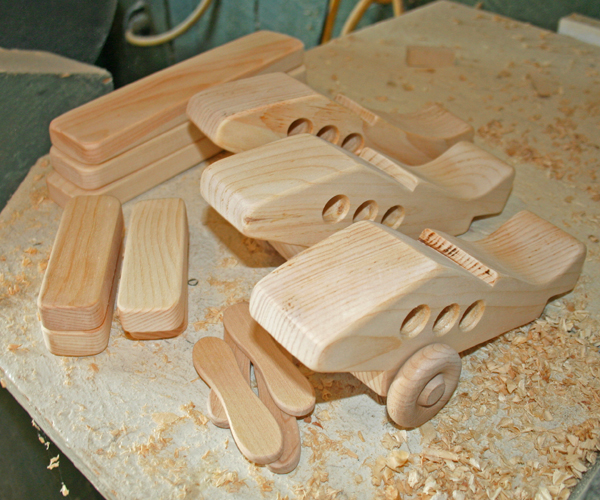
Toymakers Tip: To keep costs down, we try to always make our toys in “bunches” – 6 or 10 or 12 at a time. That way, we only set up our jigs and tools once, but we use them several times before moving to the next step in the toymaking process. It saves time, which helps us keep our prices low and save money for our customers.
Step 2: Sanding. And more sanding.
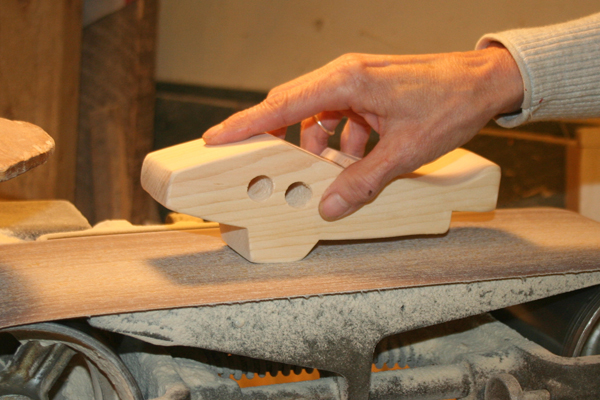
Kathy is sanding an airplane body on one of our big 6″ x 48″ belt sanders. It takes strong wrists, dexterity and plenty of practice to hold, turn and manipulate the airplane, to make sure every surface, edge and corner is perfectly smooth.
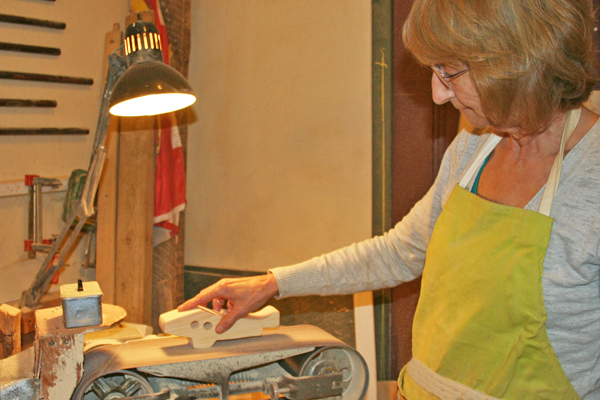
Kathy will use two other specialized sanders and a unique grinder before all the airplane parts are ready – no rough surfaces, sharp edges or pointy corners.
Toymakers Tip: With most toys, we spend more time sanding than on any other step in the toy-making process. That’s because Smooth = Safe.
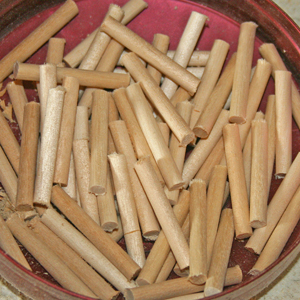
Step 3: Pegging the wings & tail. This step is the most old-fashioned & unique: No Plastic or Metal Parts Found Here.
We use wooden pegs, white glue and sturdy clamps to secure the wings, tails and propellors to our toy airplanes. That means using special jigs, and a multi-step drilling and pegging process.
To allow us to drill down into the wing for the pegs that will attach it to the airplane, we fit the body into a special jig. It lowers the airplane’s nose, which levels the upper wing surface for easy drilling.
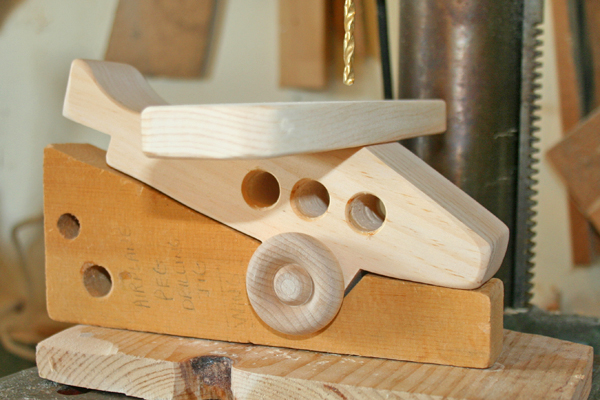
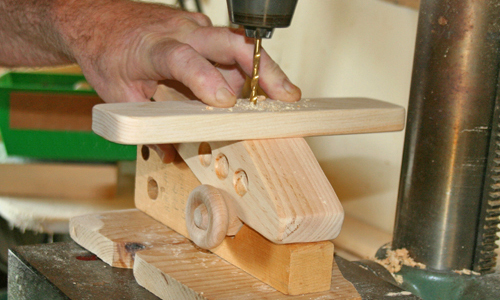
With white glue between the wing and the airplane, Dan holds the two pieces together, and drills the holes for the pegs.
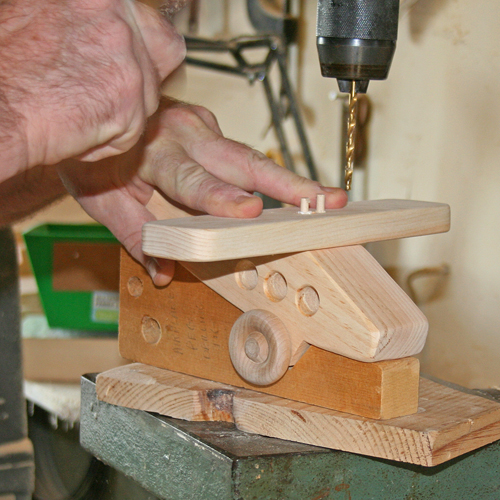
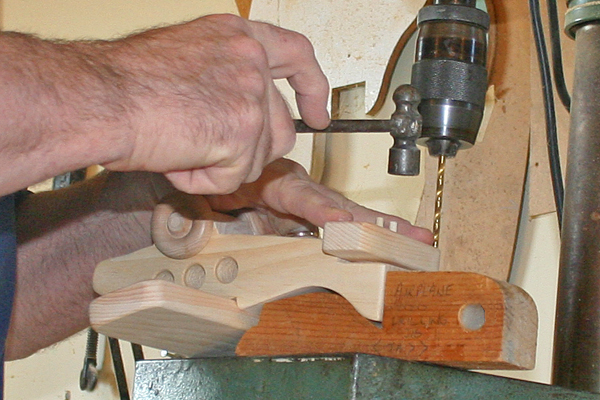
Next, with a drop of white glue in each hole first, the pegs are pushed into the holes through the wings. They’ll be tapped down tight with a little toymaking hammer to lock the wing onto the airplane body.
Here, the airplane is flipped over into another special jig for drilling and pegging the tail.
Step 4: It’s time to install the propellor, and there’s no wasting time. The airplane needs to get into its clamps quickly after the wing and tail pegs are put in, before the glue starts to dry.
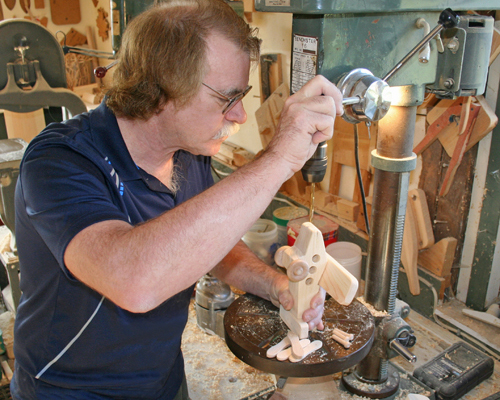
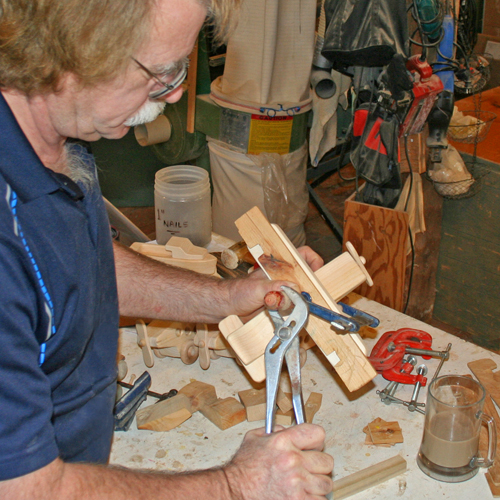
Step 5: Into the clamps. In 30+ years of toymaking, Dan has developed a knack for holding the airplane in its special jigs – inside an adjustable C-clamp – while tightening the clamp with his other hand. It’s not as easy as it looks.
Â
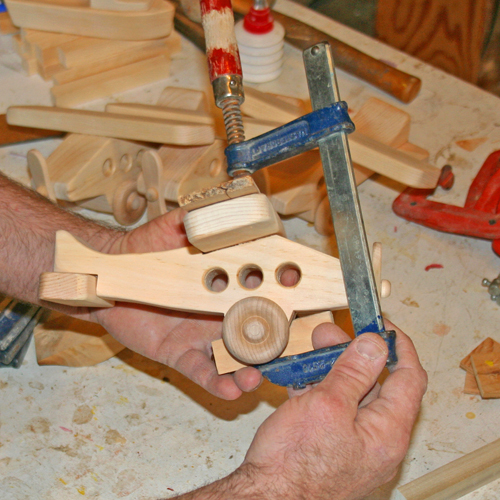
Notice how the little jig under the airplane makes that bottom surface level with the top surface of the wing, so the clamp will work properly. It also protect the airplane from the clamp – we tighten our clamps with a lot of force when making our toys. In toymaking, jigs are very important. We have dozens of original jigs in our workshop, designed specifically for making our wooden toys.
The Final Step – Time to Dry
With wings and tails securely clamped, our airplanes will hang to dry for 24 hours in our workshop.
When we remove the clamps the next day, we give the wings and tails a quick sanding to smooth off the tops of the pegs. Then, we give the propellors a test spin, and our new Airplanes fly out to their landing strip in our store.
Hands On @ The Toy Factory Workshop is a special feature designed to give our customers an exclusive look inside our toymaking workshop… where we make our wooden toys the “old-fashioned” way: handcrafted one toy at a time, with care and attention.Â
Shop for our Airplane – or to see all our Toy Factory Wooden Toys, please click here.
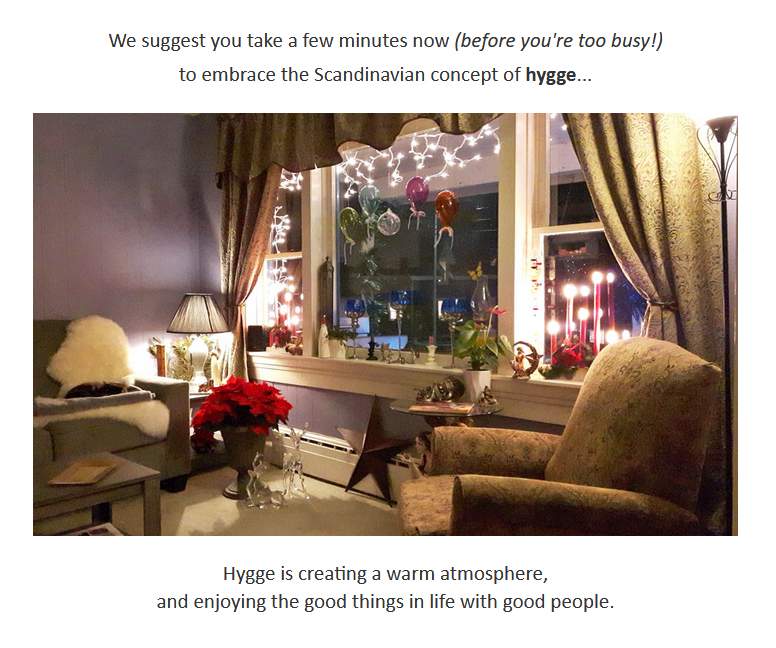
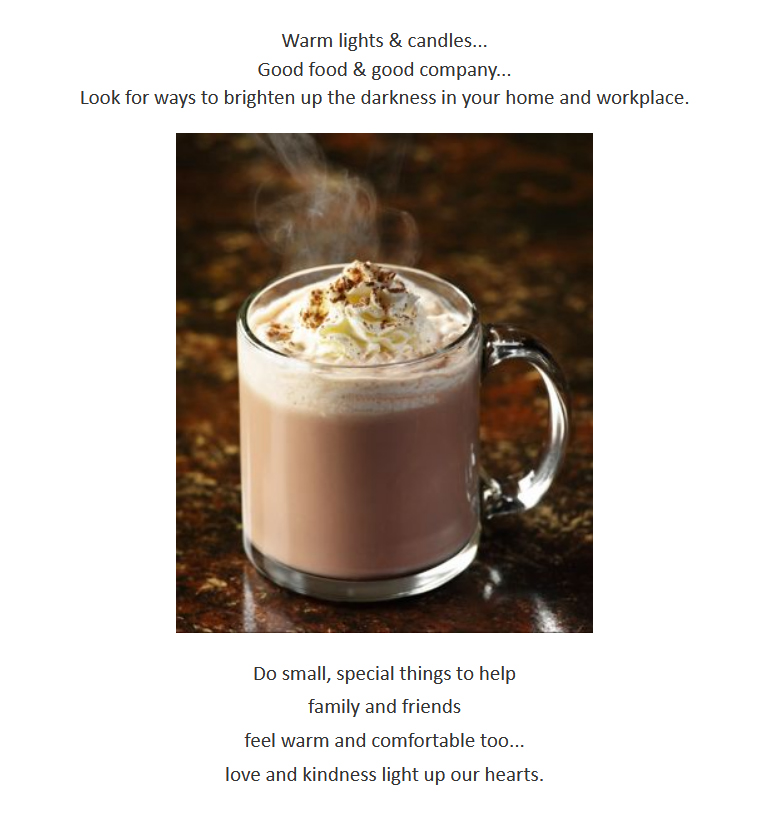
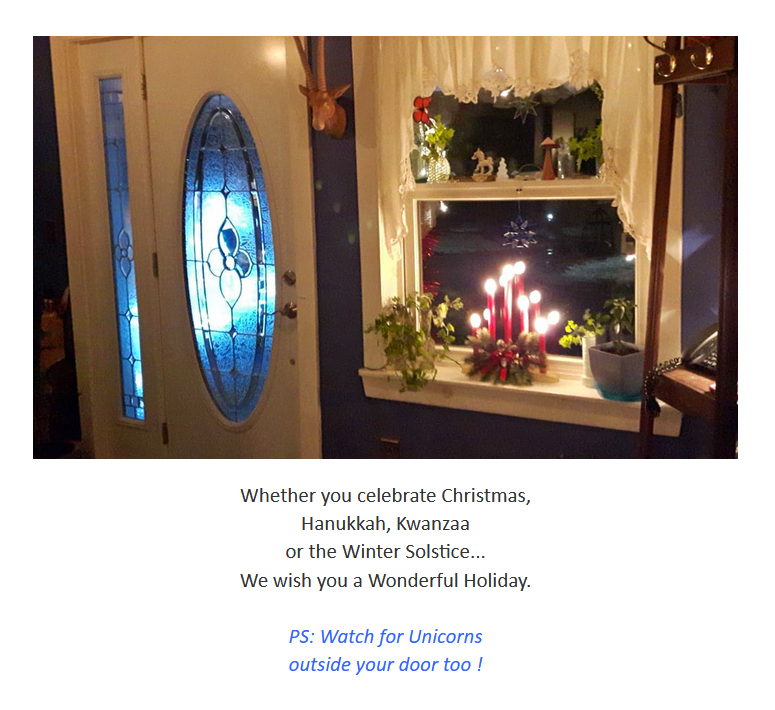
Our holiday wish to you ! ♥ A bit of “hygge” to warm your home and your heart. ♥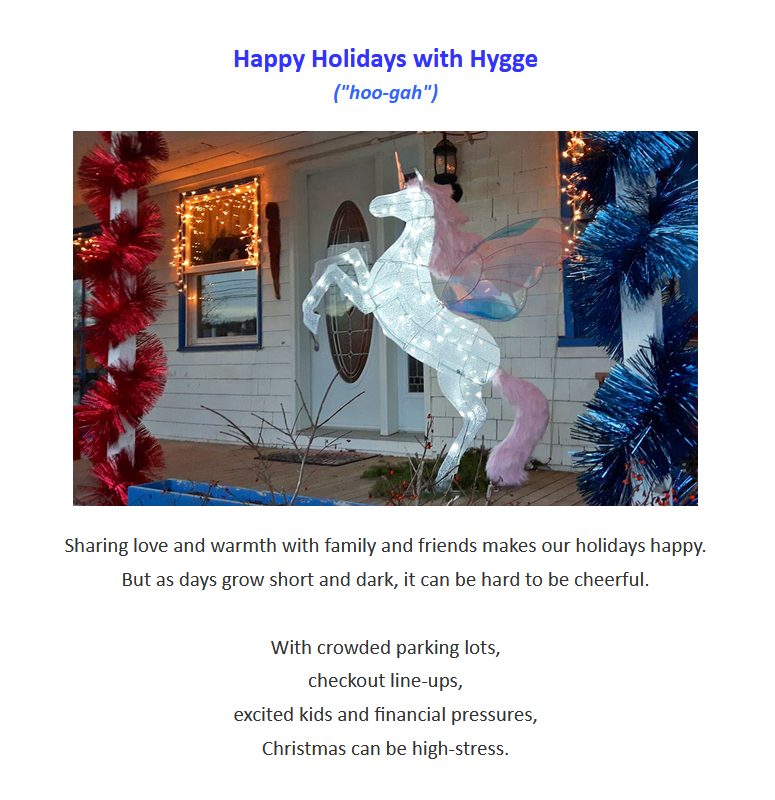

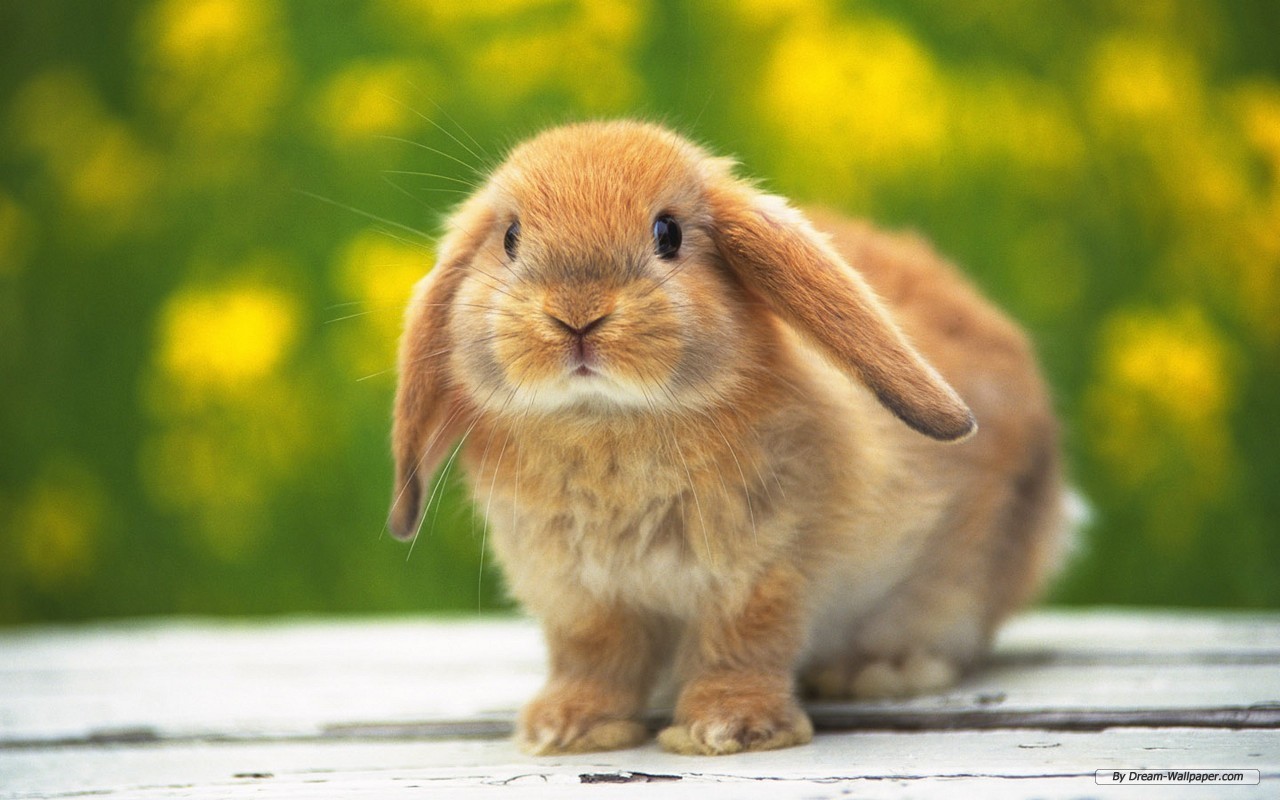
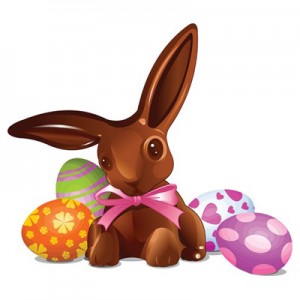
Here comes Peter Cottontail,
Hopping down the bunny trail,
Hippity… hoppity… Peter’s on his way !
The Easter Bunny is a delightful, magical part of childhood, almost as wonderful as Santa Claus.
But the tradition of an Easter “bunny” – or more accurately, a hare – bringing colorful, decorated eggs to children on Easter Sunday originated hundreds of years ago in medieval Europe.
In fact, the Easter Hare was first described more than 300 years ago, in a manuscript called “About Easter Eggs” published in Germany in 1682.
 But How Did it Start ?
Rabbits have been associated with spring and fertility since the first humans saw their frisky mating-season antics and prolific breeding ability.
In fact, it was originally believed rabbits could reproduce without mating – no surprise, considering some pregnant female hares can actually get pregnant again before giving birth to their first litter.
The Goddess of Spring
In northeastern Europe, in the days before Christianity, the Teutonic tribes there would hold feasts at the time of the Spring Equinox to honor “Eostre”, their goddess of spring and fertility – who was often symbolized by a rabbit.
In the same way as the early Christian church “merged'” the pagan Winter Solstice gatherings with it’s celebration of Christmas, the tradition of a gathering and feast to honor Eostre was adopted by the church to eventually become what we know as Easter today.
But here’s a twist…
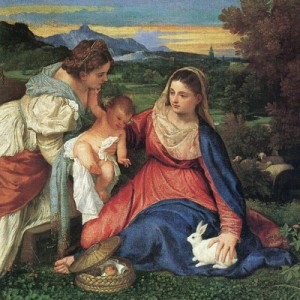 The myth that bunnies could have babies without mating – in other words, that rabbits and hares could give birth yet still be “virgins”- led the early Christian church to associate rabbits with the Virgin Mary. That’s why you can find bunnies in medieval religious paintings !
We Can’t Waste the Eggs !
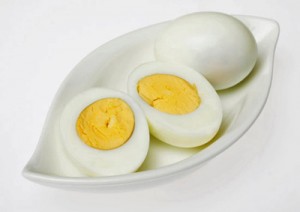 From ancient times, eggs were magical – they produced new life.
The egg’s special status in pagan mythology led the early Orthodox Christian church to order the faithful to abstain from eating eggs during the fasting period of Lent, leading up to Easter, when Christ would be re-born and ascend to Heaven.
Mind you, the only way to keep those eggs from spoiling during Lent was to hard-boil or roast them.
And – on Easter Sunday morning, when the Lent fast ended, those eggs were a delicious treat. It was only natural that people began decorating those special eggs, as they waited for Easter to arrive.
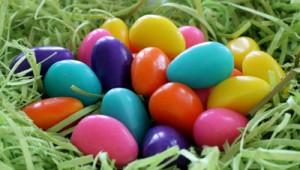 Eventually, the church relaxed its rules, allowing the faithful to eat eggs again during Lent. But the delightful tradition of decorating “Easter” eggs continued.
What Do the Colors Mean ?
Many Christians in the Eastern Orthodox church still dye their Easter eggs red, to symbolize the blood of Christ.
Green is popular as the color of spring, and yellow is associated with wealth and prosperity.
The Art of Ukrainian Egg Decorating
The art of decorating Easter eggs with beautiful, intricate designs is a cultural tradition identified with the people of Ukraine, but it’s popular among families all across northeastern Europe.
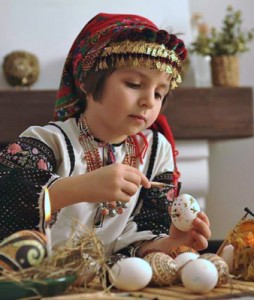
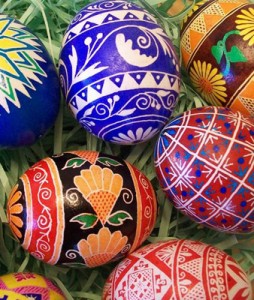 There are almost a dozen variations on the “pysanka”, or Ukrainian Egg.
It’s typically done by painting the design onto the egg using beeswax, then dipping the egg in dye, which only colors the un-waxed surface.
With many hours of intricate work, repeating the wax & dye process over and over, the results are incredible.
Our Easter Bunny
The idea of a hare that brought colorful eggs to children at Easter was carried across the Atlantic to North America by Protestant German families who settled alongside the Dutch in Pennsylvania. They called the magical rabbit “Osterhase” or “Oschter Haws” – the “Easter Hare”.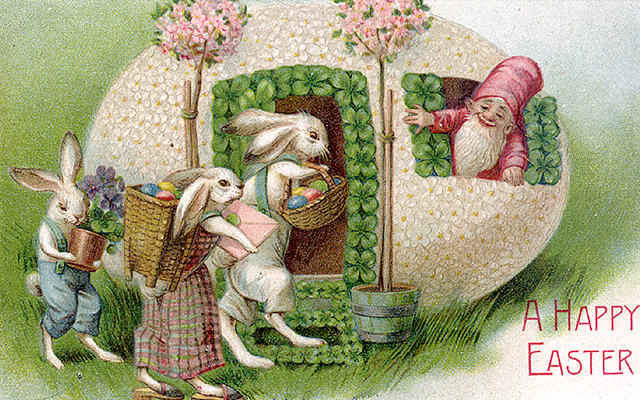
Among the striking similarities to Santa Claus, only “good” children would find Easter eggs in the nests they made in their caps and bonnets the night before Easter.
Eventually, the Easter caps and bonnets were exchanged for decorated baskets, and the colorful hard-boiled eggs were replaced by candy, treats and other Easter gifts.
Easter Fun Facts
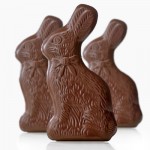 3 out of 4 people eat the ears on their chocolate Easter Bunny first.
The first chocolate eggs were made in Europe in the early 1800’s.
Chocolate eggs are still among the most popular treats associated with Easter.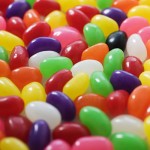
Easter has the 2nd highest candy sales in the year. (Halloween is in top spot.)
Red is the most popular color for jelly beans.
 The largest Easter egg ever made was over 10 meters high (34 feet) and weighed almost 8 tons, or 16,000 lbs.
More than 500,000 eggs were hidden in the biggest Easter egg hunt ever held, which took place in Florida in 2007.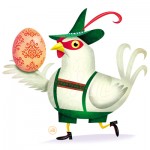
And not everyone in the world celebrates Easter with a Bunny. In some parts of the world, it’s the Easter Fox, and in Austria and Switzerland, the Easter Cuckoo Bird delivers the eggs and candy on Easter morning!